
Grape producers are facing a loss of an estimated Rs 2.73 billion (Rs 273 crore) as the European countries have rejected consignments from India for using a chemical to preserve the fruit, exporters have said.
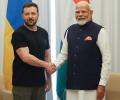
Ukraine is currently in the middle of a strategic offensive into Russia's Kursk region.
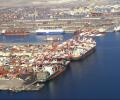
India and Iran on Monday signed a 10-year contract for the operation of a terminal at the strategically important Chabahar port in Iran, a move that will boost regional connectivity as well as trade ties. This is the first time India will take over the management of an overseas port that will also have a multiplier effect on trade among India, Iran and Afghanistan as efforts continue to directly tap the potential in Central Asia, bypassing neighbouring Pakistan.

The crisis and the painful, austerity-induced recession will focus anger on a relentless Germany.

The attacks that left at least 120 dead in Paris are the deadliest in Europe since the Madrid train bombings in March 2004.

By piling more pressure on governments, central banks risk not accomplishing much and yet provoking a political backlash that could threaten their independence.

Dani Olmo came off the bench in the second half to give Barcelona the spark they needed on his debut, against Rayo Vallecano.
Sources in the CBI claimed that Shankaran, against whom an Interpol Red Corner Notice was issued last year, is believed to be in France, a country he often visited for business purposes.
Never allow financial capital to dominate over the real economy.


The next round of bad news could come from Europe, where banks in a number of economies such as Italy, Portugal and Greece are sitting on mountains of bad loans.

Bayern Munich won the Champions League for a sixth time by beating Paris St Germain 1-0 in Sunday's final
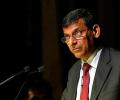
Head of central banks from various countries get into a 'Basel huddle' every second month at Basel at the headquarters of the Bank for International Settlement.

The vote leaves Greece in uncharted waters: risking a banking collapse that could force it out of the euro.

Russia's unprecedented rapprochement with North Korea has raised concerns about the re-emergence of a Russia-China-North Korea alliance which could increase the probability of conflict on the Korean Peninsula, explains Dr Rajaram Panda.

'The maximum struggle that I have gone through in this industry was to try to get a film made which had a female action star.' 'And that film never got made, despite reaching out to some of the biggest actresses.'

'Given that the situation is quickly escalating, such attacks will affect the flow of crude in the short term from West Asia' Subhayan Chakraborty and Dhruvaksh Saha report.

Forest and tribal rights activist Alok Shukla will on Friday receive the prestigious Goldman Environmental Prize -- 2024 for successfully leading a community campaign that saved 4.45 lakh acres of biodiversity-rich forests from 21 planned coal mines in Chhattisgarh.
India on Wednesday asked for enhanced economic ties with Central and East European countries.

The result of the opinion polls would allow the government to move ahead quickly to reach a deal with creditors

Several hundred students from Mumbai schools including 20 school-cricket teams, got the opportunity to take photographs with the ICC Men's Cricket ODI World Cup Trophy at the Bombay Scottish school situated at Mahim, north central Mumbai.

More than half (56 per cent) of chief economists expect the global economy to weaken in 2024, with most saying the pace of geo-economic fragmentation will accelerate, according to the latest "Chief Economists Outlook" released on Monday at the World Economic Forum (WEF). The report indicates that the global economic prospects remain subdued and uncertain. Challenges include tight financial conditions, geopolitical rifts, and the rapid development of generative artificial intelligence (AI).

'I don't think we have ever seen such alignment of everything that we need in the banking sector.'

Cognizant Technology Solutions has restructured its global growth markets (GGM) by appointing two internal leaders who will now share the responsibility. The move follows the exit of former GGM leader Rob Walker last month and is among the slew of leadership changes the company has seen in the recent past. GGM refers to the company's emerging markets outside of North America.

The agency had received Rs 946.51 crore to manage its affairs in the Budget Estimates for 2023-24, which was later increased to Rs 968.86 crore in the Revised Estimates.

Parts of the world on Friday witnessed a solar eclipse

'Like every Budget, this time, too, there is chatter around tinkering with the long-term capital gains tax.' 'Investors may not want to jump into the markets until there is clarity on this front.'
Touted as its first global product, the diesel SUV was recently introduced in the South African market.
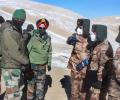
Lou also spoke about China's tensions with neighbouring countries without directly mentioning the eastern Ladakh border standoff with India since May 2020 which resulted in the Galwan Valley clash in June of that year.
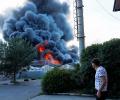
The current instability in the world is a result of long term systemic and socio-politico problems, points out Colonel Anil A Athale (retd).
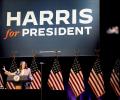
'I hope that Macho Man agrees to debate her, because I think she will do spectacularly well in the debate.'

The Centre should provide a clear regulatory pathway that it will follow so that automobile companies can plan their investments and car launches accordingly, Venkatram Mamillapalle, managing director (MD) & chief executive officer (CEO), Renault India Operations, said on Tuesday. Renault is planning to launch five cars - including a B-plus segment sport utility vehicle (SUV), a C-segment SUV and an electric vehicle (EV) - in India in the next three years, he told reporters. In early 2022, the ministry of road transport and highways had announced that cars in India would be required to have six airbags from October 1, 2022.
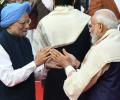
While Narendra Modi spent fewer days abroad than his predecessor -- 275 days versus Dr Singh's 306 - he has travelled more widely than any other Indian PM.
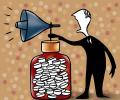
In recent months, several pharma multinational corporations (MNCs) are increasingly turning to Indian companies to expand market reach in the country's pharmaceuticals sector. Sanofi's partnerships with Dr Reddy's, Cipla, and Emcure, AstraZeneca and Mankind Pharma - teaming up for asthma medication distribution - are a few instances of this trend. This strategy allows MNCs to leverage established Indian networks and reach a wider audience. Indian companies also benefit from global brands and expertise, say analysts.
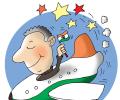
The enduring legacy of trade routes lies in shared stories and religious diversity. Can the India-Middle East-Europe Economic corridor harness this legacy to empower nations, asks Arundhuti Dasgupta.
The Export-Import Bank of India is planning to extend loans worth $150 million to the developing countries in Africa, Asia and Europe in six months.
Most of India's oil supplies are expected to stay safe because of the country's good relations with both Russia and Iran. That would take care of over a third of India's supplies.
Gold has been with us since time immemorial.

External Affairs Minister S Jaishankar on Monday held wide ranging discussions with Iranian counterpart Hossein Amirabdollahian in Tehran and their discussion focused on the long term framework for India's involvement with the strategically vital Chabahar port and the North-South connectivity project.
